One of the most common questions in any household is this: does it use more energy to leave the electric water heater on all day or only turn it on when needed?Many myths have arisen around this question regarding savings, consumption, and the lifespan of the water heater. In this guide, we'll calmly debunk them and explain how to use your water heater efficiently, without sacrificing comfort. Easily calculate the power you need.
Although there are general guidelines, every home has different characteristics. Insulation, orientation, ceiling height, and climate zone can completely change heating needs.
That's why, in addition to this guide, we've also included our heating calculator to give you a much more accurate recommendation based on your room and actual needs.
With it you will be able to:
- Quickly calculate the recommended watts.
- Choosing the right thermal emitter.
- Optimize energy consumption.
- Avoid errors of oversizing or underpowering.
👉 You can use the Climastar heating calculator to find the ideal power for each room in your home.
Why is it important to calculate heating power correctly?
Thermal power determines the capacity of a radiator or emitter to heat a space.
If you choose less power than you need:
- The room will take a long time to warm up.
- The system will work constantly.
- Consumption may increase.
If you choose too much power:
- You'll spend more than necessary.
- The initial investment will be higher.
- The system will operate less efficiently.
Balance is key.
How many watts do I need per square meter?
Although every home is different, there is a commonly used guideline:
| Type of housing | Recommended power |
|---|---|
| Well-insulated house | 70-90 W/m² |
| Medium insulation | 90-110 W/m² |
| Cold or poorly insulated housing | 110-130 W/m² |
For example:
- A well-insulated 12 m² room would need approximately between 840 and 1080 W.
- A 20 m² room with average insulation could require about 1800-2200 W.
Factors that influence the power required
Room size
The larger the square footage of a room, the more power it will need to heat it properly.
Ceiling height
Homes with high ceilings require more energy to maintain a comfortable temperature.
Level of insulation
Old windows, poorly insulated walls, or drafts significantly increase heating needs.
Orientation of the house
North-facing rooms usually need more power than south-facing rooms.
Climate zone
Heating a home in a temperate zone is not the same as heating it in a cold and humid climate.
How to calculate the necessary power step by step
1. Calculate the square meters
Multiply the length by the width of the room.
Example:
- Bedroom of 4 m x 3 m = 12 m².
2. Determine the level of isolation
Analyze:
- Windows.
- Enclosures.
- Orientation.
- Age of the house.
3. Multiply by the recommended watts
Practical example:
Room:
- 12 m².
- Medium insulation.
- Recommendation: 100 W/m².
Calculation:
12×100=1200 W
Result:
- You would need approximately 1200 W.
Is one large radiator better than several small ones?
In large spaces, it is usually more efficient to distribute the power across several thermal emitters than to install one very powerful one in a single location.
This improves:
- Heat distribution.
- The feeling of comfort.
- Energy efficiency.
What mistakes should you avoid when choosing the power
Don't just focus on square meters
Isolation and orientation are equally important.
Choose less power to save
An under-equipped team will work longer and could consume even more.
Oversizing the heating
More power does not necessarily mean more efficiency.
Which heating system is most efficient for each room
Bedrooms
Ideally, a stable and moderate temperature is usually desired, with programmable and efficient systems.
Halls
They require greater thermal capacity because they are areas of continuous use and with a larger volume of air.
Bathrooms
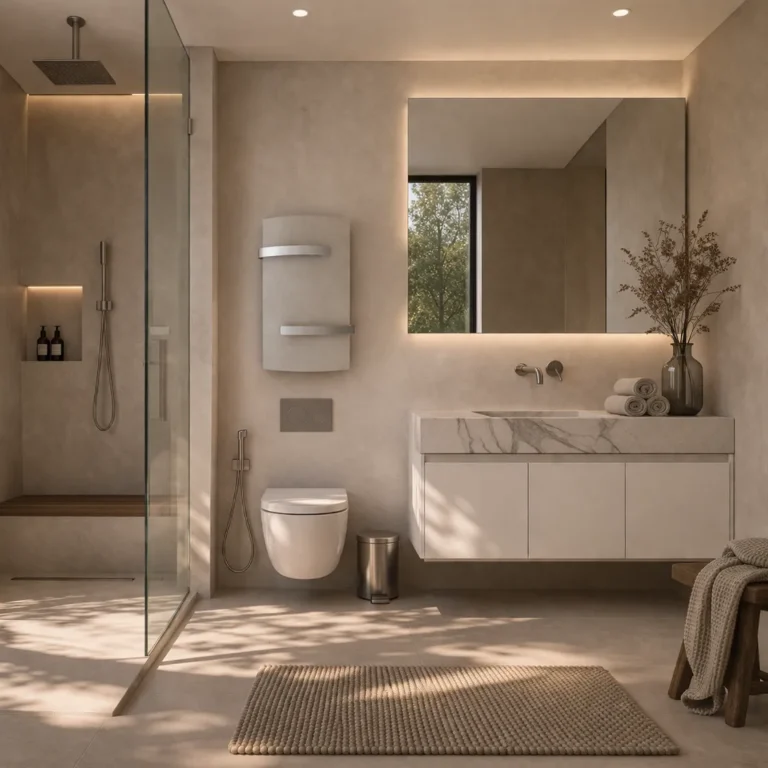
Electric towel rails help improve comfort and reduce humidity.
Offices and teleworking
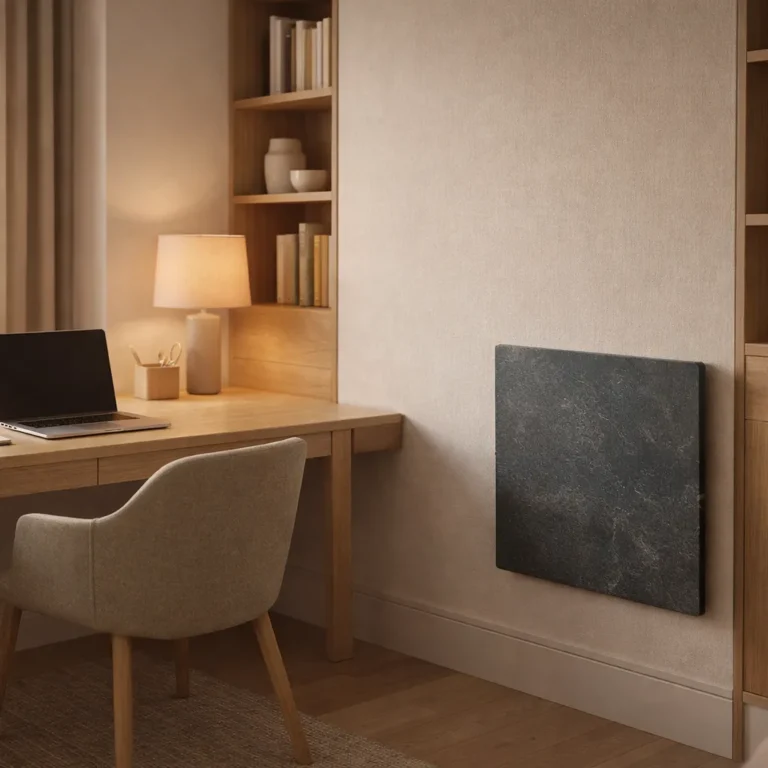
Low-consumption emitters with intelligent control allow you to maintain comfort only during the necessary hours.
Advantages of choosing efficient thermal emitters
Modern electric heating systems offer:
- Intelligent programming.
- Precise temperature control.
- Lower energy consumption.
- Greater thermal stability.
- Better comfort.
Furthermore, current designs allow heating to be integrated into home decor.